
The NEA, the AFT and Eugenics, 1901–1938: A Documentary Record
This page brings together documents in the EFI Research Archives that record contact between the National Education Association (NEA), the American Federation of Teachers (AFT) and the eugenics movement from 1901 to 1938. Each entry rests on a printed page in the NEA's annual proceedings, the NEA Bulletin and Journal, NEA committee reports and research bulletins, or the AFT's American Teacher, and each links to the scanned page.
The NEA material falls into three periods. From 1901 to 1916, papers and recommendations in several NEA departments discussed sterilization, segregation and marriage restriction (NEA, Journal of Proceedings and Addresses 40 (1901): 879; NEA, Journal of Proceedings and Addresses 42 (1903): 773; NEA, Journal of Proceedings and Addresses 53 (1915): 1090). In 1913 C. B. Davenport of the Eugenics Record Office (ERO) read "Fit and Unfit Matings" to the Department of Special Education (NEA, Journal of Proceedings and Addresses 51 (1913): 772). In 1916 the NEA's National Council of Education created a Committee on Racial Well-Being, chaired by Helen C. Putnam (NEA Bulletin 4, no. 5 (April 1916): 36). Its reports named Davenport as an adviser and as a judge of its prize studies, and its roster was still printed for 1924–25 (NEA, Addresses and Proceedings 54 (1916): 252; NEA, Addresses and Proceedings 60 (1922): 562; NEA, Addresses and Proceedings 63 (1925): 966). From 1924 to 1938, NEA health and research publications stated or described eugenic measures (NEA–AMA Joint Committee, Health Education (1924), 27; NEA, Research Bulletin 12, no. 5 (November 1934): 251; Journal of the NEA 27, no. 1 (January 1938): 10). Critical voices appear in NEA publications from 1911 on (NEA, Journal of Proceedings and Addresses 49 (1911): 247).
The AFT record is short. We found no AFT committee, resolution or program that endorsed eugenics. The three documented AFT items, from 1927, 1931 and 1938, are critical of hereditarian or eugenic claims (American Teacher 12, no. 3 (November 1927): 12; American Teacher 15, no. 7 (April 1931): 16; American Teacher 22, no. 5 (May–June 1938): 34).
A companion reading guide gathers 25 passages on eugenics from the Commissioner of Education’s reports and the NEA’s proceedings, each opened at the printed page: Eugenics in the education record: a reading guide.
How to read this page
Every item on this page was checked against an image of the printed page. Each citation gives the printed page number, and each link opens the scan at that page. Items are graded in two tiers.
- DOCUMENTED
- The page itself shows the connection to eugenics. Only DOCUMENTED items appear on this page.
- PROBABLE
- The page is verified, but the link to eugenics is indirect or passing. These items are kept as research leads and are not shown here.
The wording follows what each page does:
- Proposed, urged or recommended is used only when the page itself does so.
- Described, listed or reported is used when the page reports or lists without endorsing, as in research bulletins, committee lists and reading lists.
- Referred to is used for a passing mention.
- Committee business is stated as fact (for example, "the committee's report named Davenport as a judge"). No view is attributed to a committee member beyond what that person signed or said.
- Questioned or disputed is used for critical voices.
Membership in a eugenics organization is reported as membership and is not treated as evidence of advocacy. Programs of allied organizations printed in NEA publications are not treated as NEA activity. Names are spelled as printed where the page differs, for example "Putman" (1920–21) and "Charles P. Davenport" (1934) for C. B. Davenport.
Timeline
Each entry gives the date, what the document shows, the printed-page citation and the archive link. Entries marked "Context" are outside events included for orientation.
-
July 1901 NEA
Brandt proposes sterilization to NEA special-education department
Francis Burke Brandt, addressing the NEA Department of Education of the Deaf, Blind and Feeble-Minded, proposed sterilization as "a remedy as simple as vaccination."
Source: NEA, Journal of Proceedings and Addresses 40 (1901): 879.
Open the scan at this page · Volume page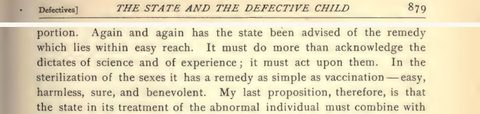
NEA Journal of Proceedings and Addresses, v.40, 1901, p.879, EFI Research Archives -
July 1903 NEA
Hastings urges marriage eligibility laws at Child-Study Department
William W. Hastings told the Child-Study Department that the state "must ultimately protect itself" from "the propagation of chronic disease" and other conditions "by eligibility laws on marriage."
Source: NEA, Journal of Proceedings and Addresses 42 (1903): 773.
Open the scan at this page · Volume page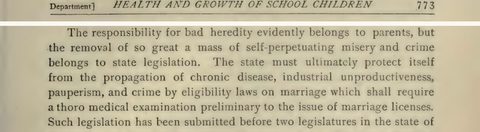
NEA Journal of Proceedings and Addresses, v.42, 1903, p.773, EFI Research Archives -
June 1904 NEA
Jones describes Ohio custodial farm for feeble-minded adults
In his presidential address to the Department of Special Education, J. W. Jones described the Ohio custodial farm for feeble-minded adults, whose "prime object" was "to prevent the propagation of their own kind."
Source: NEA, Journal of Proceedings and Addresses 43 (1904): 936.
Open the scan at this page · Volume page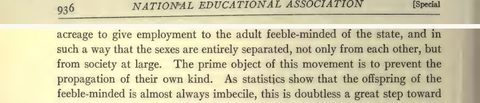
NEA Journal of Proceedings and Addresses, v.43, 1904, p.936, EFI Research Archives -
July 1909 NEA
Main cites Washington marriage law as a prophecy for eugenics
Josiah Main, Department of Agricultural Education, described Washington State's restriction on marriage as "a prophecy of the day" when eugenics would be "legally recognized and applied."
Source: NEA, Journal of Proceedings and Addresses 47 (1909): 986.
Open the scan at this page · Volume page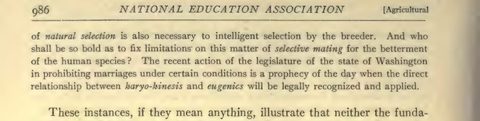
NEA Journal of Proceedings and Addresses, v.47, 1909, p.986, EFI Research Archives -
July 1910 NEA
G. Stanley Hall refers to the near future of eugenics
G. Stanley Hall, Department of Physical Education, referred to "the near future of eugenics" and to "Galton's dream of endowed wedlock."
Source: NEA, Journal of Proceedings and Addresses 48 (1910): 931.
Open the scan at this page · Volume page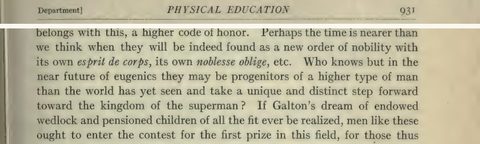
NEA Journal of Proceedings and Addresses, v.48, 1910, p.931, EFI Research Archives 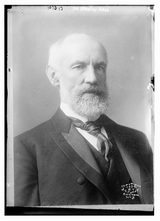
J. E. Purdy, Boston, 1904. George Grantham Bain Collection, Library of Congress Prints and Photographs Division, LC-DIG-ggbain-05209 -
July 1910 NEA
Hall lists eugenics among proposed child-welfare bureau interests
G. Stanley Hall, Child-Study Department, listed eugenics among the interests of a proposed national child-welfare bureau.
Source: NEA, Journal of Proceedings and Addresses 48 (1910): 893.
Open the scan at this page · Volume page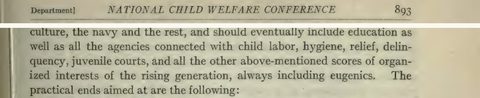
NEA Journal of Proceedings and Addresses, v.48, 1910, p.893, EFI Research Archives J. E. Purdy, Boston, 1904. George Grantham Bain Collection, Library of Congress Prints and Photographs Division, LC-DIG-ggbain-05209 -
February 1911 NEA
Ayres calls eugenics aims noble but its methods wrong
Leonard P. Ayres, Department of Superintendence, called the aims of eugenics "high and noble" but said "in their methods its advocates are wrong."
Source: NEA, Journal of Proceedings and Addresses 49 (1911): 247.
Open the scan at this page · Volume page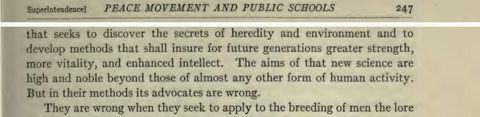
NEA Journal of Proceedings and Addresses, v.49, 1911, p.247, EFI Research Archives 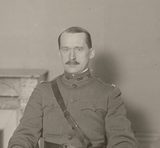
U.S. Army Signal Corps photograph 62939, "Room E-10, Colonel L.P. Ayers, Intelligence Section, Hotel Crillon, Paris," 3 Feb. 1919. National Archives (NAID 86730634) -
May 1911 Context, outside the archive
Eugenics Record Office issues Bulletin No. 2
The ERO issued Bulletin No. 2, The Study of Human Heredity, by Charles B. Davenport, H. H. Laughlin, David F. Weeks, E. R. Johnstone and Henry H. Goddard.
Source: Davenport et al., The Study of Human Heredity, ERO Bulletin No. 2 (May 1911), title page (unnumbered).
Outside source: archive.org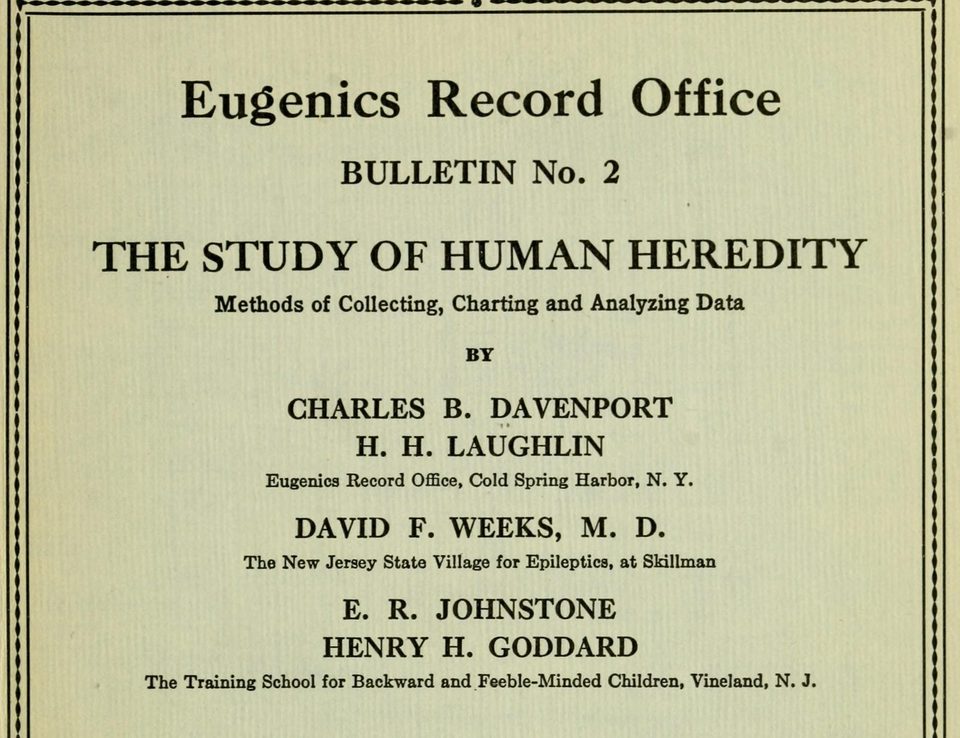
Davenport et al., The Study of Human Heredity, Eugenics Record Office Bulletin No. 2 (Cold Spring Harbor, 1911), title page; via Internet Archive 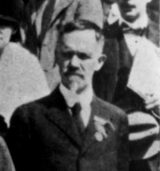
The Scientific Monthly, vol. 13 no. 5 (Nov. 1921), p.479 (detail), via Internet Archive -
July 1911 NEA
Goddard proposes preventing hereditary cases of mental deficiency
Henry H. Goddard, Department of Special Education, proposed preventing "hereditary cases" of mental deficiency: "It is only to prevent their being born."
Source: NEA, Journal of Proceedings and Addresses 49 (1911): 1043.
Open the scan at this page · Volume page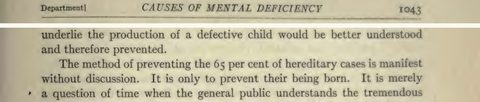
NEA Journal of Proceedings and Addresses, v.49, 1911, p.1043, EFI Research Archives -
July 1912 Context, outside the archive
First International Eugenics Congress meets in London
The First International Eugenics Congress met at the University of London, July 24–30.
Source: Problems in Eugenics (London, 1912), title page (unnumbered).
Outside source: archive.org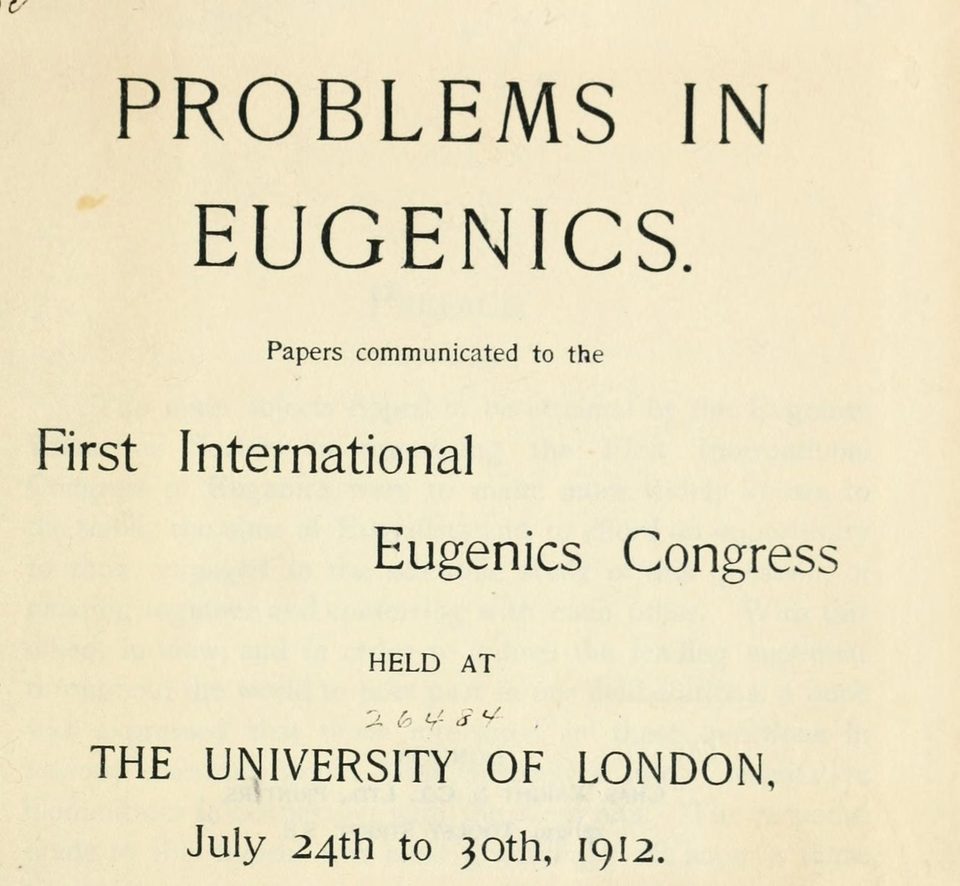
Problems in Eugenics (London: Eugenics Education Society, 1912), title page; via Internet Archive -
July 1912 NEA
McKeever reads paper titled "Eugenics" to science department
William A. McKeever read a paper titled "Eugenics" to the Department of Science Instruction.
Source: NEA, Journal of Proceedings and Addresses 50 (1912): 1156.
Open the scan at this page · Volume page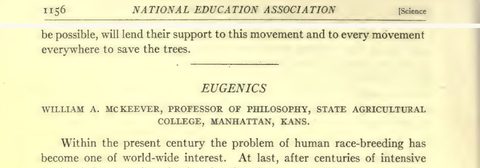
NEA Journal of Proceedings and Addresses, v.50, 1912, p.1156, EFI Research Archives -
July 1912 NEA
Evans urges making eugenics a practical workaday matter
W. A. Evans, Department of School Patrons, urged "that eugenics be made a practical workaday matter of consideration."
Source: NEA, Journal of Proceedings and Addresses 50 (1912): 1328.
Open the scan at this page · Volume page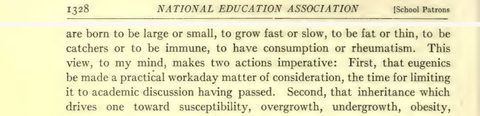
NEA Journal of Proceedings and Addresses, v.50, 1912, p.1328, EFI Research Archives -
July 1913 NEA
Joint health committee report refers to "human eugenics"
The report of the National Council of Education's Joint Committee on Health Problems in Education, in a section by R. W. Corwin, referred to "human eugenics."
Source: NEA, Journal of Proceedings and Addresses 51 (1913): 419.
Open the scan at this page · Volume page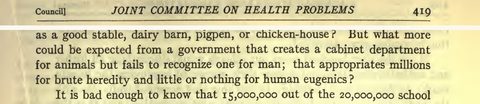
NEA Journal of Proceedings and Addresses, v.51, 1913, p.419, EFI Research Archives -
July 1913 NEA
Davenport reads "Fit and Unfit Matings" at Salt Lake City
C. B. Davenport read "Fit and Unfit Matings" to the Department of Special Education at Salt Lake City.
Source: NEA, Journal of Proceedings and Addresses 51 (1913): 772.
Open the scan at this page · Volume page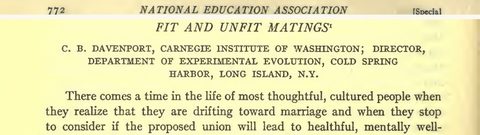
NEA Journal of Proceedings and Addresses, v.51, 1913, p.772, EFI Research Archives The Scientific Monthly, vol. 13 no. 5 (Nov. 1921), p.479 (detail), via Internet Archive -
July 1913 NEA
Groszmann questions alarmism and overemphasis on heredity
At the same session, M. P. E. Groszmann questioned "alarmism and overemphasis" on heredity.
Source: NEA, Journal of Proceedings and Addresses 51 (1913): 768.
Open the scan at this page · Volume page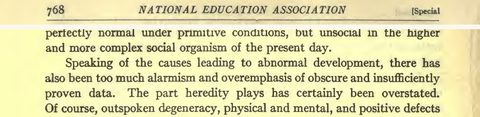
NEA Journal of Proceedings and Addresses, v.51, 1913, p.768, EFI Research Archives -
August 1915 NEA
Holmes listed on Oakland program for "Education and Race Improvement"
S. J. Holmes was listed on the program of a general session at Oakland for an address, "Education and Race Improvement."
Source: NEA, Journal of Proceedings and Addresses 53 (1915): 25.
Open the scan at this page · Volume page
NEA Journal of Proceedings and Addresses, v.53, 1915, p.25, EFI Research Archives -
August 1915 NEA
Special Education department recommends compulsory segregation legislation
The Department of Special Education recommended legislation "to secure compulsory segregation of the feeble-minded."
Source: NEA, Journal of Proceedings and Addresses 53 (1915): 1090.
Open the scan at this page · Volume page
NEA Journal of Proceedings and Addresses, v.53, 1915, p.1090, EFI Research Archives -
February 1916 NEA
Putnam presents "The New Ideal in Education" at Detroit
Helen C. Putnam presented "The New Ideal in Education: Better Parents of Better Children" to the National Council of Education at Detroit.
Source: NEA, Addresses and Proceedings 54 (1916): 242.
Open the scan at this page · Volume page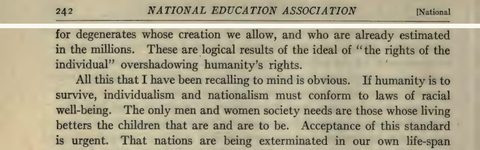
NEA Addresses and Proceedings, v.54, 1916, p.242, EFI Research Archives -
April 1916 AFT
American Federation of Teachers formed in Chicago
The American Federation of Teachers was formed in Chicago. This entry marks the AFT's founding and is not related to eugenics.
Source: American Teacher 5, no. 5 (May 1916): 69, "An International Union of Teachers."
Open the scan at this page
American Teacher, v.5 no.5, 1916, p.69, EFI Research Archives -
April 1916 NEA
National Council creates committee on racial well-being
The National Council of Education created "a committee to study methods of promoting the ideal of racial well-being."
Source: NEA Bulletin 4, no. 5 (April 1916): 36.
Open the scan at this page
NEA Bulletin, v.4 no.5, 1916, p.36, EFI Research Archives -
April 1916 NEA
Committee references list Davenport and Eugenics Record Office publications
The committee's prize-competition references listed Davenport's Heredity in Relation to Eugenics and "Publications by Eugenics Record Office."
Source: NEA Bulletin 4, no. 5 (April 1916): 38.
Open the scan at this page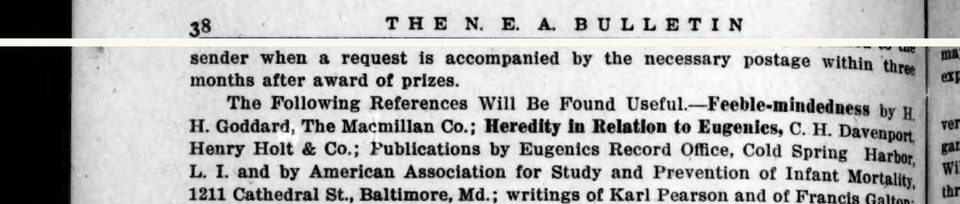
NEA Bulletin, v.4 no.5, 1916, p.38, EFI Research Archives The Scientific Monthly, vol. 13 no. 5 (Nov. 1921), p.479 (detail), via Internet Archive -
April 1916 NEA
Science department announces planned trip to Cold Spring Harbor
The NEA Department of Science Instruction announced a planned trip to Cold Spring Harbor and "the eugenics record office" for its July meeting. No record that the trip took place was found.
Source: NEA Bulletin 4, no. 5 (April 1916): 21.
Open the scan at this page
NEA Bulletin, v.4 no.5, 1916, p.21, EFI Research Archives -
July 1916 NEA
Yerkes addresses National Council on racial well-being
Robert M. Yerkes addressed the National Council of Education on "Educational and Psychological Aspects of Racial Well-Being" in New York.
Source: NEA, Addresses and Proceedings 54 (1916): 248.
Open the scan at this page · Volume page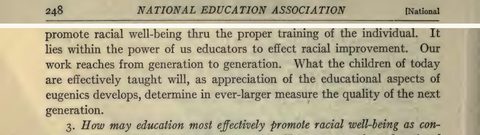
NEA Addresses and Proceedings, v.54, 1916, p.248, EFI Research Archives -
July 1916 NEA
Committee statement names Davenport an advisory specialist
A Committee on Racial Well-Being statement named Davenport as "one of our advisory committee of specialists" and reported that he sent the ERO family-study form.
Source: NEA, Addresses and Proceedings 54 (1916): 252.
Open the scan at this page · Volume page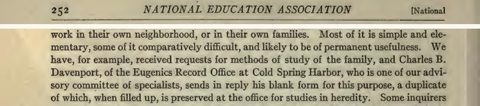
NEA Addresses and Proceedings, v.54, 1916, p.252, EFI Research Archives The Scientific Monthly, vol. 13 no. 5 (Nov. 1921), p.479 (detail), via Internet Archive -
February 1917 NEA
Secretary's report lists Committee on Racial Well-Being
The NEA Secretary's report listed the Committee on Racial Well-Being, Putnam chairman, as authorized by the National Council of Education at the Detroit meeting.
Source: NEA Bulletin 5, no. 4 (February 1917): 87.
Open the scan at this page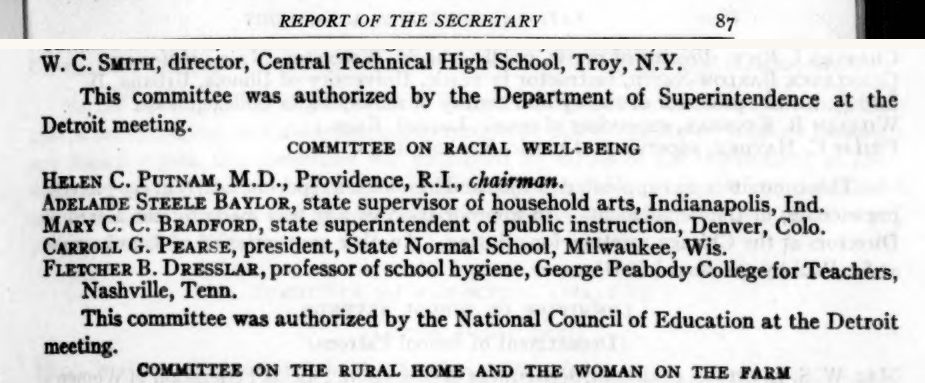
NEA Bulletin, v.5 no.4, 1917, p.87, EFI Research Archives -
April 1917 NEA
Committee announces $4,000 in prizes for studies
The committee announced $4,000 in prizes for studies on the proposition that educators should "assure thru educational procedures that individuals shall be well born."
Source: NEA Bulletin 5, no. 6 (April 1917): 22.
Open the scan at this page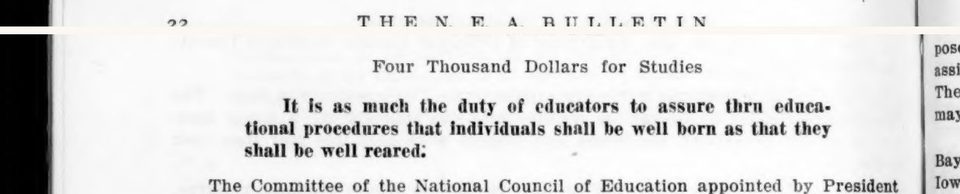
NEA Bulletin, v.5 no.6, 1917, p.22, EFI Research Archives -
July 5, 1920 NEA
Minutes record membership change on "Race Betterment Committee"
National Council minutes recorded Susan M. Dorsey replacing Adelaide S. Baylor on the "Race Betterment Committee," the minutes' name for the Racial Well-Being committee.
Source: NEA, Addresses and Proceedings 58 (1920): 109.
Open the scan at this page · Volume page
NEA Addresses and Proceedings, v.58, 1920, p.109, EFI Research Archives 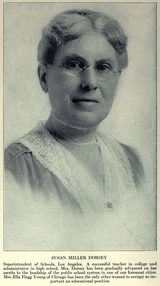
Educational Review, vol. 62 (1921), plate (IA leaf n295), via Internet Archive -
July 1921 NEA
Second Report of Progress read at Des Moines
The Second Report of Progress of the Committee on Racial Well-Being was read at Des Moines.
Source: NEA, Addresses and Proceedings 59 (1921): 362.
Open the scan at this page · Volume page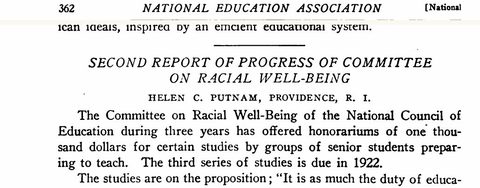
NEA Addresses and Proceedings, v.59, 1921, p.362, EFI Research Archives -
September 1921 Context, outside the archive
Second International Congress of Eugenics meets in New York
The Second International Congress of Eugenics met at the American Museum of Natural History, New York, September 22–28, 1921.
Source: Eugenics, Genetics and the Family (1923), title page (unnumbered); the congress is also named in NEA, Addresses and Proceedings 60 (1922): 564.
Outside source: archive.org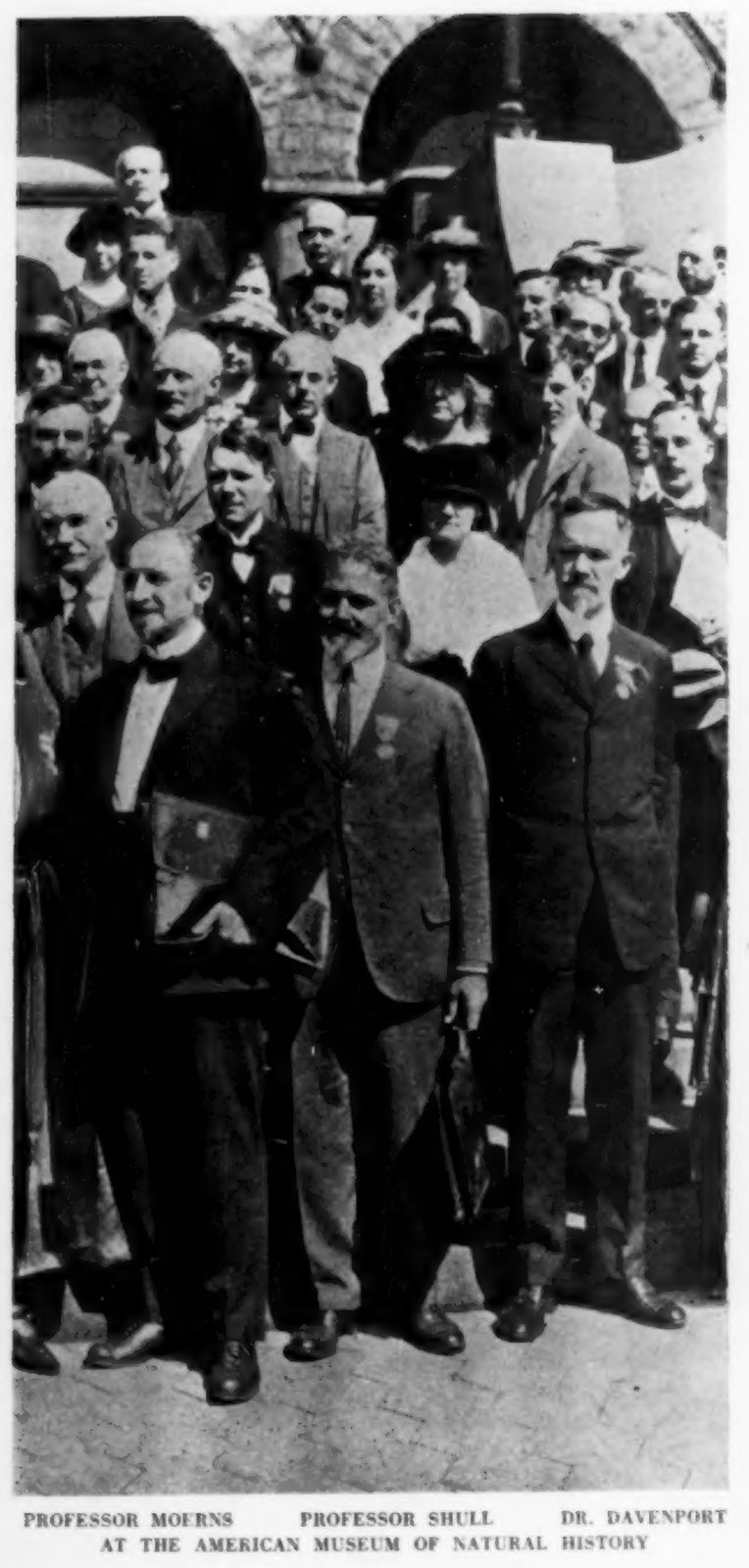
The Scientific Monthly 13, no. 5 (November 1921), plate p. 479; via Internet Archive -
July 1922 NEA
Committee report names Davenport among prize judges
The committee's report named Davenport, "of the Eugenics Record Office," among the judges of its prize studies.
Source: NEA, Addresses and Proceedings 60 (1922): 562.
Open the scan at this page · Volume page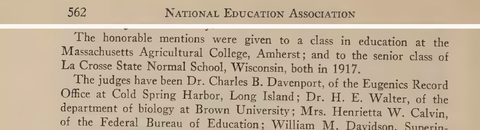
NEA Addresses and Proceedings, v.60, 1922, p.562, EFI Research Archives The Scientific Monthly, vol. 13 no. 5 (Nov. 1921), p.479 (detail), via Internet Archive -
July 1922 NEA
Committee reports sending its chairman to eugenics congress
The same report stated that the committee was invited to send a delegate to the Second International Congress of Eugenics "and did so, the chairman serving."
Source: NEA, Addresses and Proceedings 60 (1922): 564.
Open the scan at this page · Volume page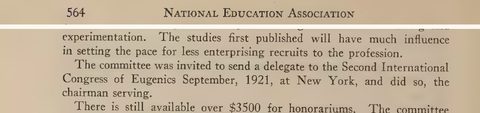
NEA Addresses and Proceedings, v.60, 1922, p.564, EFI Research Archives -
July 1922 NEA
Henry W. Holmes lists eugenic intelligence among supplements to education
Henry W. Holmes listed "at least eugenic intelligence if not measures of eugenic control" among efforts that "must supplement what education can do."
Source: NEA, Addresses and Proceedings 60 (1922): 249.
Open the scan at this page · Volume page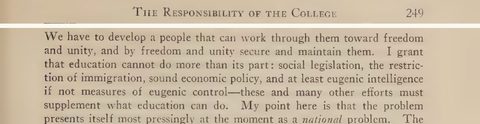
NEA Addresses and Proceedings, v.60, 1922, p.249, EFI Research Archives 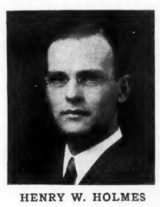
Journal of the National Education Association, vol. 11 no. 7 (Sept. 1922), p.269, EFI Research Archives -
June 1923 NEA
Bagley disputes a strictly hereditarian reading of Army tests
William C. Bagley, in the Journal of the NEA, used Army test scores by state to dispute "a strictly hereditarian hypothesis."
Source: Journal of the NEA 12, no. 6 (June 1923): 212.
Open the scan at this page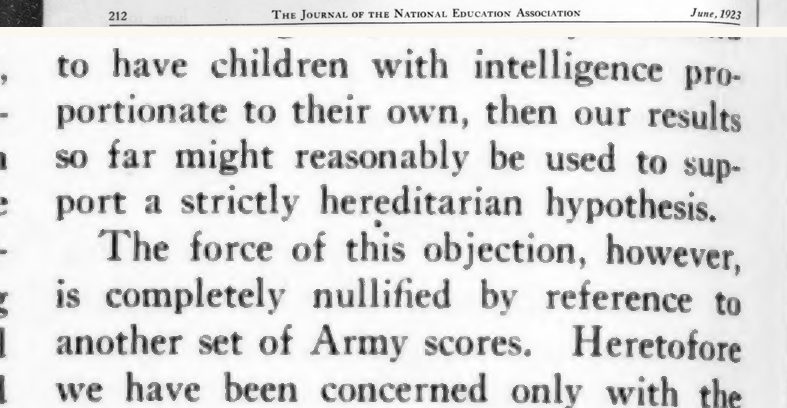
Journal of the National Education Association, v.12 no.6, 1923, p.212, EFI Research Archives -
September 1923 NEA
NEA Journal announces two $500 racial well-being prizes
The Journal of the NEA printed the committee's announcement of two $500 prizes for June 1924 on "Racial Well Being, the Educational Ideal."
Source: Journal of the NEA 12, no. 7 (September 1923): 300.
Open the scan at this page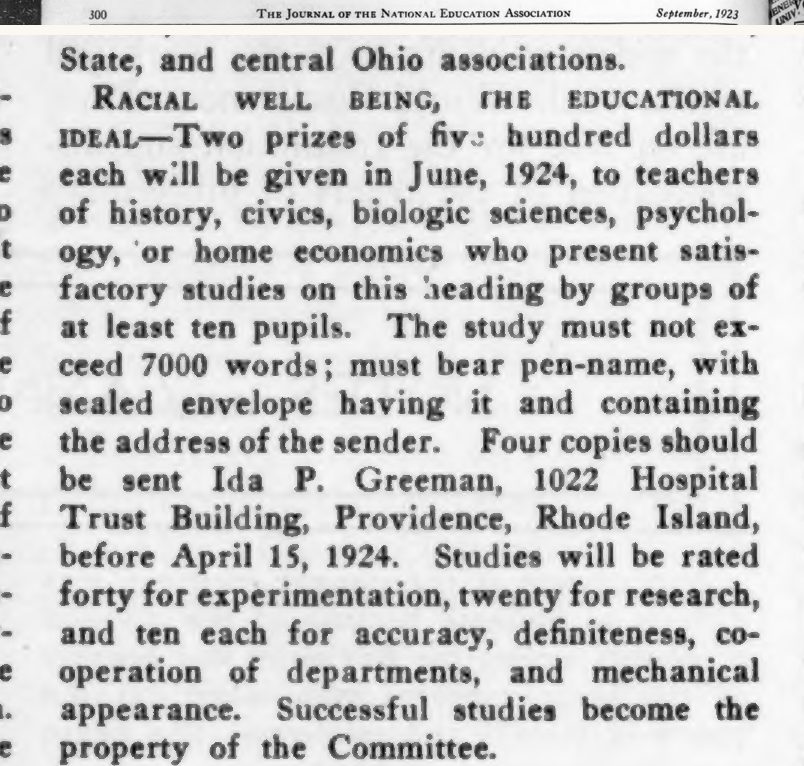
Journal of the National Education Association, v.12 no.7, 1923, p.300, EFI Research Archives -
1924 NEA
Health Education report calls eugenics education necessary
The NEA–AMA Joint Committee report Health Education stated that "Education in eugenics is one of the necessary methods of preventing marriage of the unfit."
Source: NEA–AMA Joint Committee, Health Education (1924), 35.
Open the scan at this page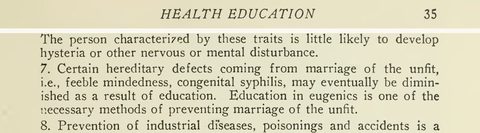
NEA-AMA Joint Committee on Health Problems in Education, Health Education, 1924, p.35, EFI Research Archives -
1924 NEA
Health Education report: hereditary factors controlled through eugenic measures
The same report stated: "Hereditary factors can be controlled only through eugenic measures."
Source: NEA–AMA Joint Committee, Health Education (1924), 27.
Open the scan at this page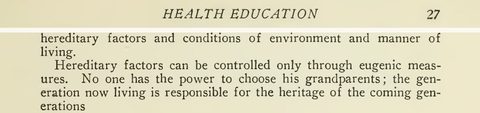
NEA-AMA Joint Committee on Health Problems in Education, Health Education, 1924, p.27, EFI Research Archives -
1925 NEA
Hargreaves criticizes "Nordic idolaters" and "radical eugenists"
R. T. Hargreaves, writing for the NEA Department of Secondary-School Principals, criticized "the Nordic idolaters, the biological determinists and radical eugenists."
Source: NEA Department of Secondary-School Principals, Ninth Yearbook (1925): 12.
Open the scan at this page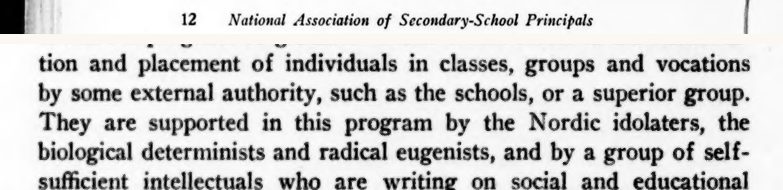
NEA Dept. of Secondary-School Principals, Ninth Yearbook, 1925, p.12, EFI Research Archives -
March 1925 NEA
NEA Journal announces two $500 awards for 1926
The Journal of the NEA printed the committee's announcement of two $500 awards for June 1926.
Source: Journal of the NEA 14, no. 3 (March 1925): 108.
Open the scan at this page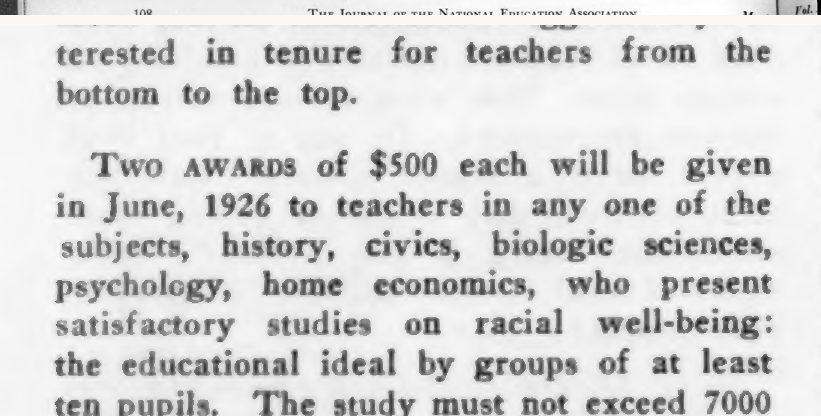
Journal of the National Education Association, v.14 no.3, 1925, p.108, EFI Research Archives -
July 1925 NEA
NEA prints 1924–25 Committee on Racial Well-Being roster
The NEA printed the roster of the Committee on Racial Well-Being for 1924–25, "Authorized by Representative Assembly."
Source: NEA, Addresses and Proceedings 63 (1925): 966.
Open the scan at this page · Volume page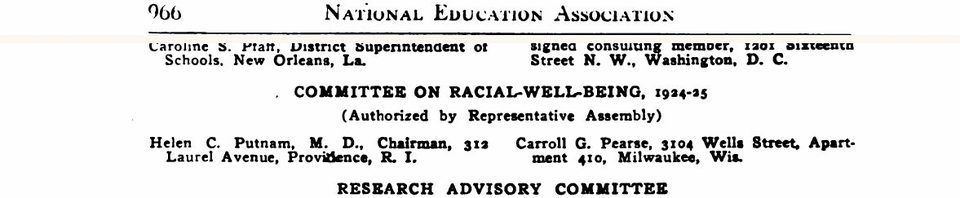
NEA Addresses and Proceedings, v.63, 1925, p.966, EFI Research Archives -
January 1926 NEA
Christianson disputes the "biological fear" attributed to Wiggam
Gov. Theodore Christianson, in "An Answer to Pessimism," disputed the "biological fear" he attributed to Albert Edward Wiggam.
Source: Journal of the NEA 15, no. 1 (January 1926): 2.
Open the scan at this page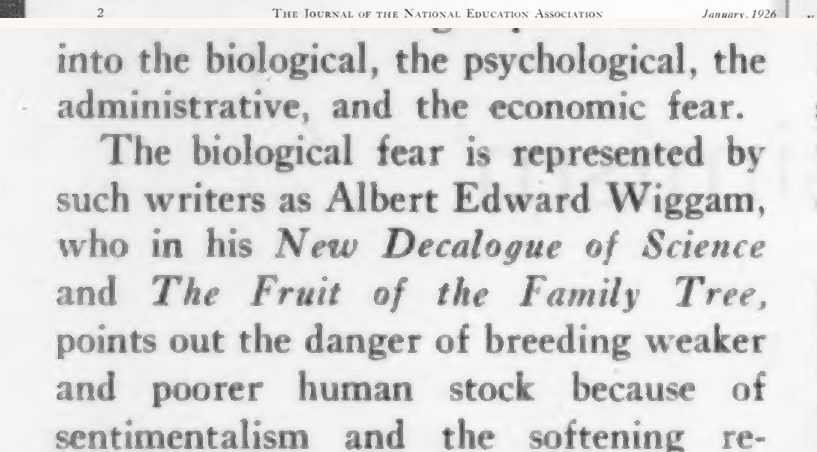
Journal of the National Education Association, v.15 no.1, 1926, p.2, EFI Research Archives 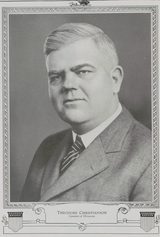
Norse-American Centennial souvenir booklet (1925), p.38, via Minnesota Digital Library (Minnesota Reflections) -
February 1926 NEA
Book list describes Bagley's Determinism in Education
An NEA Journal list of 1925 books described Bagley's Determinism in Education as an effort "to disprove that heredity is more important than environment."
Source: Journal of the NEA 15, no. 2 (February 1926): 57.
Open the scan at this page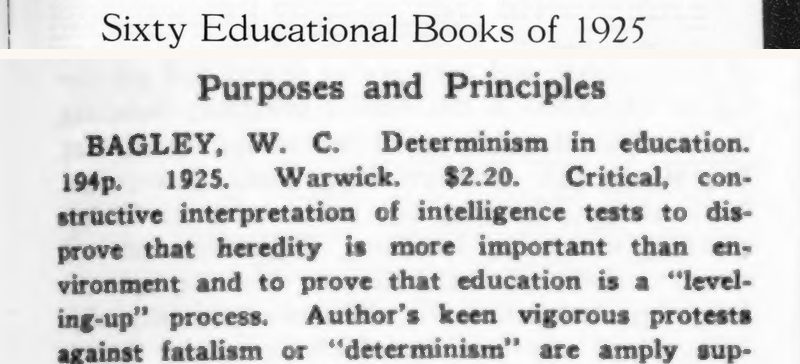
Journal of the National Education Association, v.15 no.2, 1926, p.57, EFI Research Archives -
July 1926 NEA
Starbuck links schools to "race culture through right breeding"
Edwin D. Starbuck, at a general session, said "The schools must accept their share of the responsibility for race culture through right breeding."
Source: NEA, Proceedings 64 (1926): 151.
Open the scan at this page · Volume page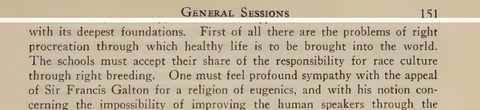
NEA Proceedings, v.64, 1926, p.151, EFI Research Archives 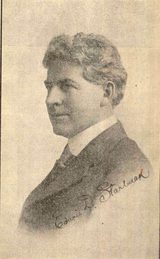
The Modern Review (Calcutta), vol. 39 no. 5 (May 1926), p.533, via Internet Archive -
July 1926 NEA
Hetherington says "eugenics holds the key to latent capacities"
Clark W. Hetherington, Department of School Health and Physical Education, said "eugenics holds the key to latent capacities."
Source: NEA, Proceedings 64 (1926): 615 (Clark W. Hetherington, "The Needs of Physical Education," which begins on p. 603).
Open the scan at this page · Volume page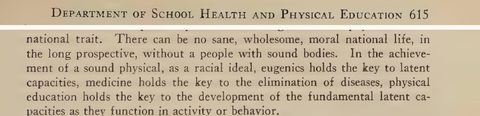
NEA Proceedings, v.64, 1926, p.615, EFI Research Archives -
July 1926 NEA
Bagley questions hereditary determinism applied to the foreign-born
William C. Bagley read "Determinism as Applied to Our Treatment of the Foreign-Born," questioning the view that mental traits are "largely fixed or determined by hereditary factors."
Source: NEA, Proceedings 64 (1926): 348.
Open the scan at this page · Volume page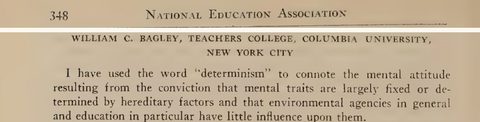
NEA Proceedings, v.64, 1926, p.348, EFI Research Archives -
May 2, 1927 Context, outside the archive
Supreme Court upholds Virginia sterilization law in Buck v. Bell
In Buck v. Bell, the U.S. Supreme Court upheld Virginia's compulsory sterilization statute. The opinion states: "Three generations of imbeciles are enough."
Source: Buck v. Bell, 274 U.S. 200, 200, 207 (1927).
Outside source: caption, p. 200 · quotation, p. 207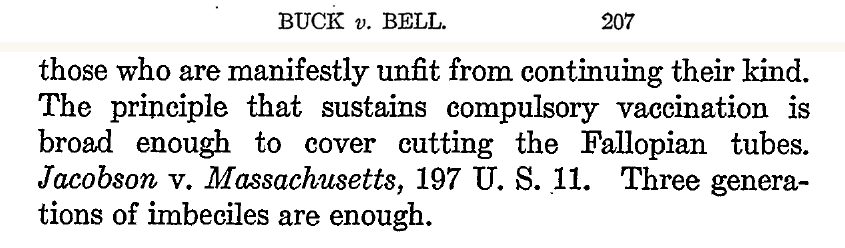
United States Reports, vol. 274, p. 207 (1927); Library of Congress -
November 1927 AFT
AFT committee report cites Bagley against hereditarian test conclusions
An AFT convention committee report, printed in the American Teacher, cited Bagley against hereditarian conclusions drawn from intelligence tests.
Source: American Teacher 12, no. 3 (November 1927): 12.
Open the scan at this page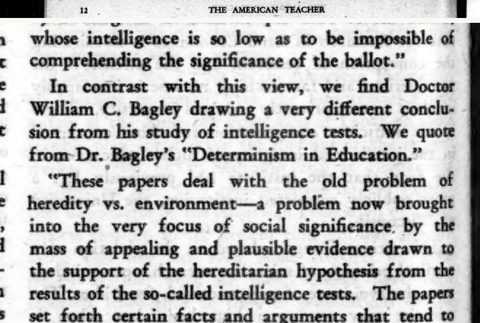
American Teacher, v.12 no.3, 1927, p.12, EFI Research Archives -
December 1928 NEA
NEA reading list includes Guyer's Being Well Born
An NEA Journal reading list included Michael F. Guyer's Being Well Born, annotated as "A very clear explanation of the facts and principles of heredity, and of their bearing on the problems of race improvement."
Source: Journal of the NEA 17, no. 9 (December 1928): 304.
Open the scan at this page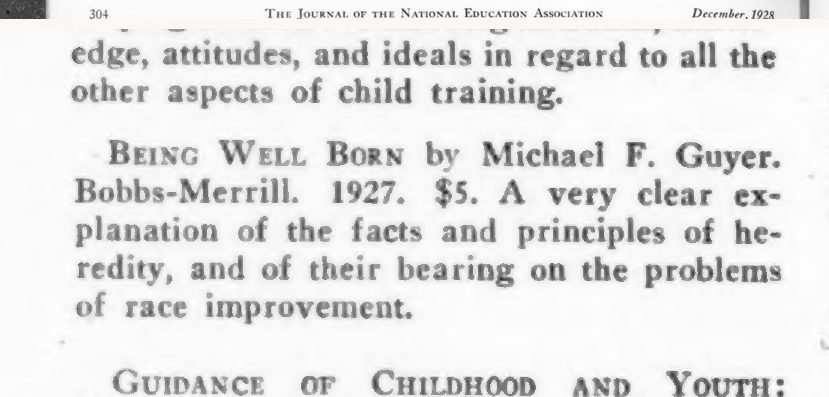
Journal of the National Education Association, v.17 no.9, 1928, p.304, EFI Research Archives -
February 1929 NEA
Freeman questions the extreme hereditarian point of view
Frank N. Freeman wrote in the Journal of the NEA that recent evidence indicated "the extreme hereditarian point of view is to be questioned."
Source: Journal of the NEA 18, no. 2 (February 1929): 54.
Open the scan at this page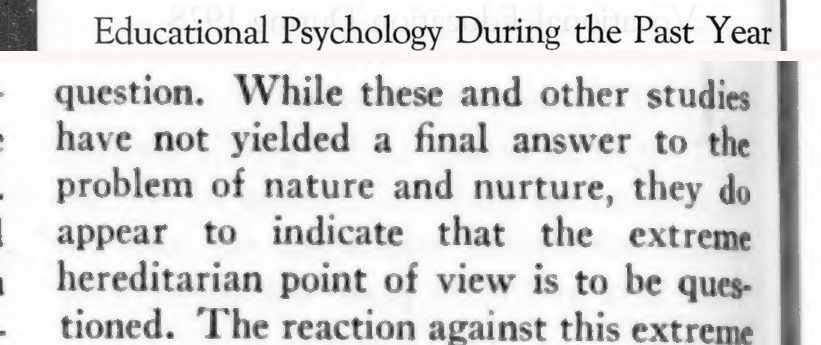
Journal of the National Education Association, v.18 no.2, 1929, p.54, EFI Research Archives -
April 1931 AFT
Mehus asks "Have We Overemphasized Heredity?"
O. Myking Mehus asked in the American Teacher, "Have We Overemphasized Heredity?"
Source: American Teacher 15, no. 7 (April 1931): 16.
Open the scan at this page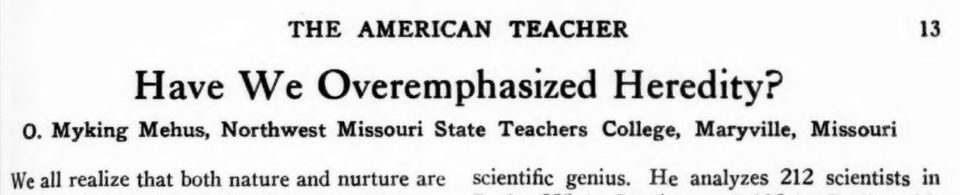
American Teacher, v.15 no.7, 1931, p.13, EFI Research Archives -
1932 NEA
NEA crime bulletin lists sterilization among suggested measures
An NEA Research Bulletin on crime listed "Sterilization of the mentally or physically diseased" among measures social workers had suggested.
Source: NEA, Research Bulletin 10 (1932): 177.
Open the scan at this page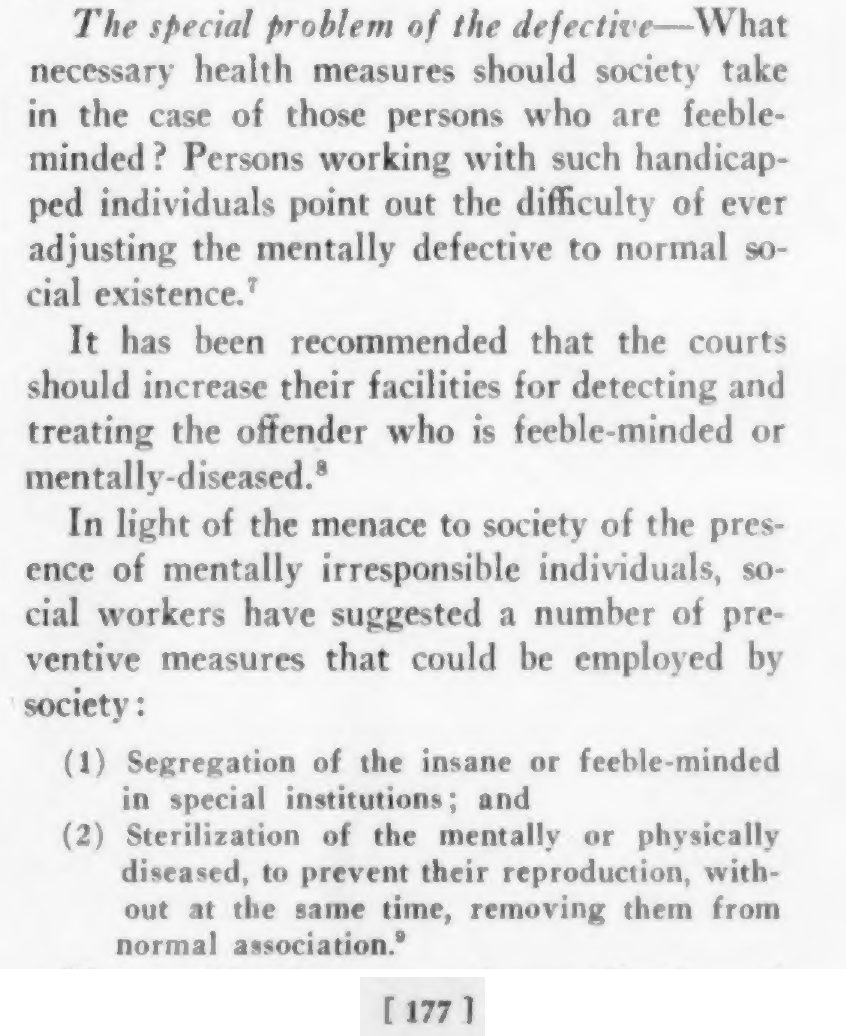
NEA Research Bulletin, v.10, 1932, p.177, EFI Research Archives -
1932 NEA
Crime bulletin bibliography includes sterilization-law entries
The same bulletin's annotated bibliography included entries on the control of defectives and on California's sterilization law.
Source: NEA, Research Bulletin 10 (1932): 197.
Open the scan at this page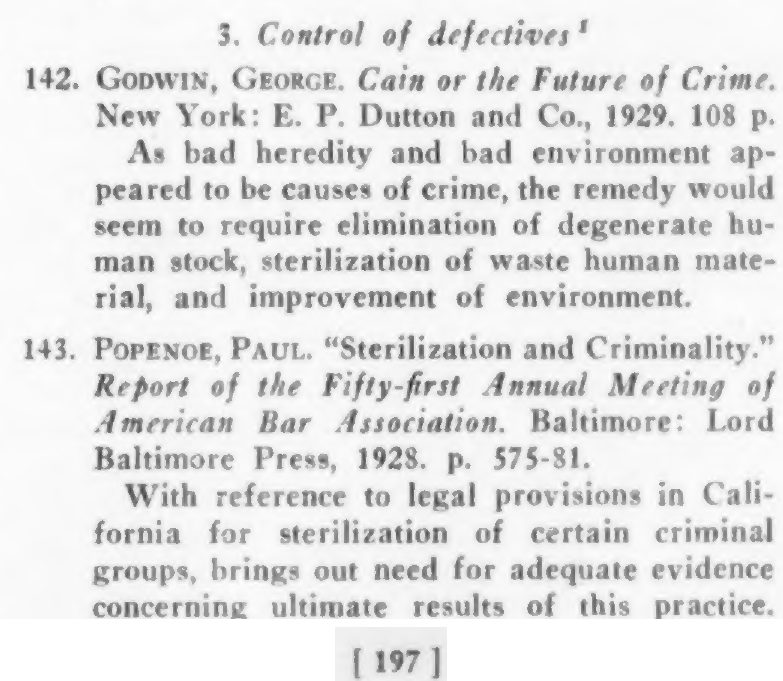
NEA Research Bulletin, v.10, 1932, p.197, EFI Research Archives -
August 1932 Context, outside the archive
Third International Congress of Eugenics meets in New York
The Third International Congress of Eugenics met at the American Museum of Natural History, New York, August 21–23, 1932.
Source: A Decade of Progress in Eugenics (1934), title page (unnumbered). This volume carries a 1934 copyright notice; it is linked and not quoted.
Outside source: archive.org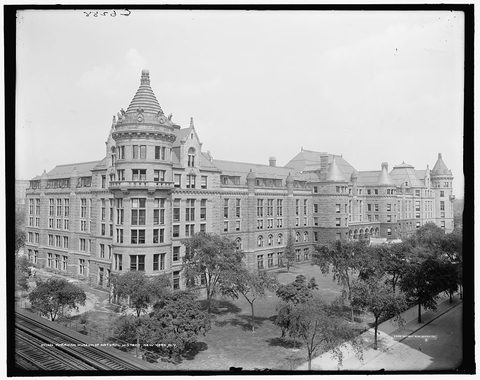
Detroit Publishing Co., "American Museum of Natural History, New York, N.Y.," c. 1900–1910; Library of Congress Prints and Photographs Division, LC-DIG-det-4a23360 -
July 1934 NEA
Social-Economic Goals subcommittee lists Davenport
The report of the NEA Committee on Social-Economic Goals for America listed C. B. Davenport, "Editor, Eugenical News," on its subcommittee on Hereditary Strength.
Source: NEA, Proceedings 72 (1934): 198.
Open the scan at this page · Volume page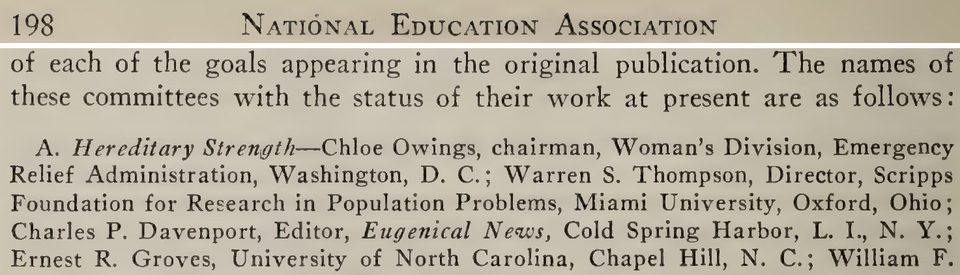
NEA Proceedings, v.72, 1934, p.198, EFI Research Archives The Scientific Monthly, vol. 13 no. 5 (Nov. 1921), p.479 (detail), via Internet Archive -
November 1934 NEA
Research Bulletin links eugenics movement to sterilization trend
An NEA Research Bulletin stated that the eugenics movement "has been partly responsible for the trend in favor of the sterilization and the segregation of defectives."
Source: NEA, Research Bulletin 12, no. 5 (November 1934): 251.
Open the scan at this page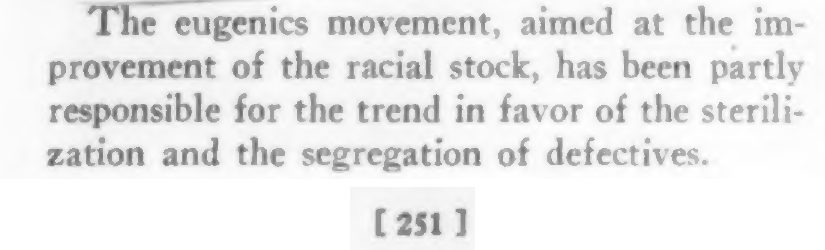
NEA Research Bulletin, v.12 no.5, 1934, p.251, EFI Research Archives -
January 1938 NEA
NEA Journal item asks about "Education for Hereditary Strength"
A Journal of the NEA item, "Education for Hereditary Strength," asked: "Are eugenic facts presented to show that it is a duty for some to accept parenthood and for others to abstain?"
Source: Journal of the NEA 27, no. 1 (January 1938): 10.
Open the scan at this page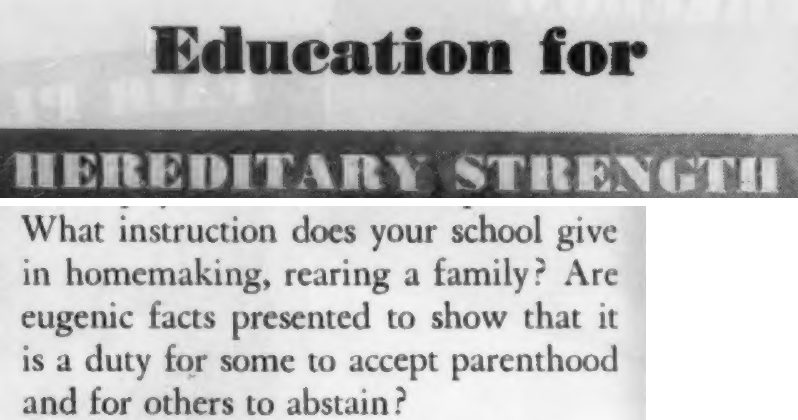
Journal of the National Education Association, v.27 no.1, 1938, p.10, EFI Research Archives -
May 1938 AFT
American Teacher review reports Haldane rejects eugenical doctrines
An unsigned review in the American Teacher reported that Haldane's Heredity and Politics showed that eugenical doctrines "cannot be scientifically supported."
Source: American Teacher 22, no. 5 (May–June 1938): 34.
Open the scan at this page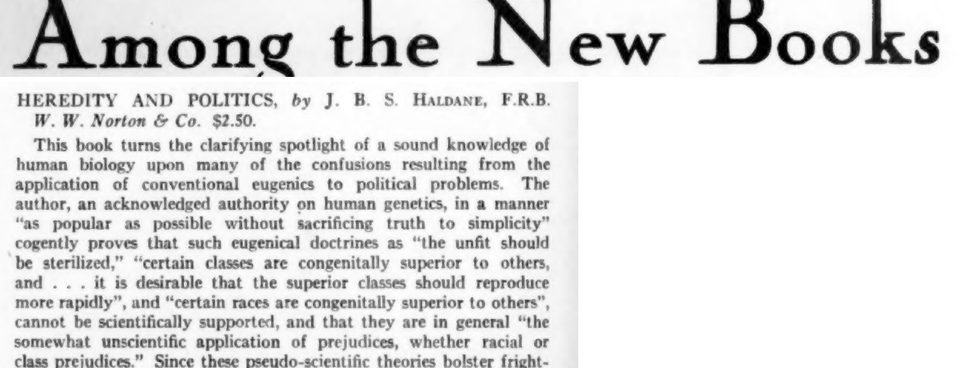
American Teacher, v.22 no.5, 1938, p.34, EFI Research Archives


Timeline rows not used: two rows in the research timeline are graded PROBABLE and were dropped under the documented-only rule. They are the outside anchors for the American Breeders' Association's eugenics committee (1906) and the opening of the Eugenics Record Office (1910). A third row, ERO Bulletin No. 13 (1915), was dropped because no archive or public-domain scan of it was found.
People with documented organizational ties
The 43 people below each held a documented role, membership or paper in a eugenics organization and a documented role, paper or committee seat in the NEA. None held AFT office. Each entry states only what the cited pages record. Membership is reported as membership.
Leaders and officers of eugenics organizations

Alexander Graham Bell. Bell chaired the ERO's Board of Scientific Directors (Science n.s. 37 (1913): 554) and was an associate of the American Breeders' Association (ABA) Eugenics Section (American Breeders Magazine 1 (1910): 235–36). In the NEA he was president of the Department of Education of the Deaf, Blind and Feeble-Minded in 1901–02; the Board of Directors renamed it the Department of Special Education on his application in 1902, and he was elected to the National Council of Education that year (NEA, Journal of Proceedings and Addresses 40 (1901): 15; NEA, Journal of Proceedings and Addresses 41 (1902): 31; NEA, Journal of Proceedings and Addresses 41 (1902): 313).
Scans:
NEA Addresses & Proceedings 1901 (v.40), p.15
· NEA Addresses & Proceedings 1902 (v.41), p.31
· NEA Addresses & Proceedings 1902 (v.41), p.828
· NEA Addresses & Proceedings 1902 (v.41), p.313
· NEA Addresses & Proceedings 1903 (v.42), p.304
· NEA Addresses & Proceedings 1897 (v.36), p.96
· NEA Addresses & Proceedings 1898 (v.37), p.1057
Outside sources:
American Breeders Magazine v.1 (1910) p.235-236
· Science n.s. 37 no.954 (11 Apr 1913) pp.553-554, 'The Eugenics Record Office' (Board of Scientific Directors named p.554)
· ERO Bulletin No.2 'The Study of Human Heredity' (May 1911), title page; back cover (unnumbered) names "Alexander Graham Bell, Washington, D. C." among the former ABA Committee on Eugenics
· Eugenical News v.5 p.14
Portrait: Frank Boteler, c. 1904. Library of Congress Prints and Photographs Division, LC-DIG-ppmsca-41738

David Starr Jordan. Jordan chaired the ABA Committee on Eugenics (American Breeders Magazine 1 (1910): 143, 235–36). He was president of the NEA for 1914–15 and president of its Department of Science Instruction in 1911–12, and he presided at the 1915 general session whose program listed S. J. Holmes on "Education and Race Improvement" (NEA, Journal of Proceedings and Addresses 53 (1915): 15; NEA, Journal of Proceedings and Addresses 49 (1911): 18; NEA, Journal of Proceedings and Addresses 53 (1915): 25).
Scans:
NEA Addresses & Proceedings 1914 (v.52), p.23
· NEA Addresses & Proceedings 1915 (v.53), p.15
· NEA Addresses & Proceedings 1911 (v.49), p.18
· NEA Addresses & Proceedings 1915 (v.53), p.25
Outside sources:
American Breeders Magazine v.1 (1910) p.143; 235-236
Portrait: Popular Science Monthly, vol. 74 (1909), plate (IA leaf n205), via Internet Archive

Charles B. Davenport. Davenport directed the ERO, served as secretary of the ABA Eugenics Section and was president of the Third International Congress of Eugenics (American Breeders Magazine 1 (1910): 235–36; A Decade of Progress in Eugenics (1934), 511). At the NEA he read "Fit and Unfit Matings" in 1913, was named an adviser to the Committee on Racial Well-Being in 1916, was reported as a judge of its prizes in 1922, and was listed on the 1934 Hereditary Strength subcommittee (NEA, Journal of Proceedings and Addresses 51 (1913): 772; NEA, Addresses and Proceedings 54 (1916): 252; NEA, Addresses and Proceedings 60 (1922): 562; NEA, Proceedings 72 (1934): 198). His earliest NEA role, on the 1899 Committee on College-Entrance Requirements, predates his eugenics work (NEA, Journal of Proceedings and Addresses 38 (1899): 808).
Scans:
NEA Addresses & Proceedings 1899 (v.38), p.808
· NEA Addresses & Proceedings 1899 (v.38), p.813
· Report of the Committee on College-Entrance Requirements (NEA, July 1899) p.179; also p.184
· NEA Addresses & Proceedings 1913 (v.51), p.772
· NEA Addresses & Proceedings 1916 (v.54), p.252
· NEA Addresses & Proceedings 1922 (v.60), p.562
· NEA Addresses & Proceedings 1934 (v.72), p.198
Outside sources:
American Breeders Magazine v.1 (1910) p.235 (unnumbered "Association Matters" opener; between printed pp.234 and 236), continuing p.236 ()
· A Decade of Progress in Eugenics (Third Int. Congress, 1934) App. I p.511 (unnumbered appendix opener; p.512 follows on leaf n567)
Portrait: The Scientific Monthly, vol. 13 no. 5 (Nov. 1921), p.479 (detail), via Internet Archive
Henry H. Goddard. Goddard was secretary of the ABA Committee on Heredity of the Feeble-Minded (American Breeders Magazine 1 (1910): 236). He was vice-president of the NEA Child-Study Department in 1906–07 (printed "Henry G. Goddard") and in 1911 told the Department of Special Education that the way to prevent hereditary cases "is only to prevent their being born" (NEA, Fiftieth Anniversary Volume (1906): 11; NEA, Journal of Proceedings and Addresses 49 (1911): 1043).
Scans:
NEA Addresses & Proceedings 1906 (v.44a), p.11
· NEA Addresses & Proceedings 1907 (v.45) p.15
· NEA Addresses & Proceedings 1908 (v.46), p.907
· NEA Addresses & Proceedings 1910 (v.48), p.874
· NEA Addresses & Proceedings 1911 (v.49), p.870
Outside sources:
American Breeders Magazine v.1 (1910) p.126 (named with Rogers); 236 (secretary)
· ERO publications list, back cover of Bulletin No. 4
· ERO Bulletin No.2 'The Study of Human Heredity' (May 1911), title page
A. C. Rogers. Rogers chaired the ABA Committee on Heredity of the Feeble-Minded (American Breeders Magazine 1 (1910): 126, 236). He was vice-president of the NEA Subdepartment for the Mentally Deficient in 1899–1900 and read "What Minnesota Is Doing for Her Feeble-Minded and Epileptics" in 1902 (NEA, Journal of Proceedings and Addresses 38 (1899): 15; NEA, Journal of Proceedings and Addresses 41 (1902): 845).
Scans:
NEA Addresses & Proceedings 1899 (v.38), p.15
· NEA Addresses & Proceedings 1899 (v.38), p.1157
· NEA Addresses & Proceedings 1902 (v.41), p.845
Outside sources:
American Breeders Magazine v.1 (1910) p.126; 236
Henry Fairfield Osborn. Osborn was president of the Second International Congress of Eugenics, an honorary president of the Third, and host of the first meeting of the Galton Society's Charter Fellows (A Decade of Progress in Eugenics (1934), 3, 511; Eugenical News 3 (1918): 54). He read "The Museum as the New Force in Public-School Development" to the NEA Department of Science Instruction in 1916 (NEA, Addresses and Proceedings 54 (1916): 739).
Scans:
NEA Addresses & Proceedings 1916 (v.54), p.739
Outside sources:
A Decade of Progress in Eugenics (Third Int. Congress, 1934) p.3 (Second Congress president); App. I p.511 (Hon. President)
· Eugenical News v.3 p.54
Howard J. Banker. Banker was acting superintendent of the ERO in 1916 and secretary of Section II of the Second International Congress (Eugenical News 1 (1916): 2; A Decade of Progress in Eugenics (1934), 4). He read a 1916 paper to the NEA Department of Special Education under the byline "Eugenics Record Office, Cold Spring Harbor" (NEA, Addresses and Proceedings 54 (1916): 888).
Scans:
NEA Addresses & Proceedings 1916 (v.54), p.888
Outside sources:
Eugenical News v.1 p.2 (index p.89) (p.2 missing from IA page_numbers.json; leaf located by OCR and image-checked)
· A Decade of Progress in Eugenics (Third Int. Congress, 1934) p.4; App. I p.513

Robert M. Yerkes. Yerkes served on the National Research Council Committee on Eugenics and the ERA committee on the Second International Congress, and was a member of the Third (Eugenical News 5 (1920): 14; A Decade of Progress in Eugenics (1934), 520). He addressed the National Council of Education in 1916 on racial well-being, and his "Study of the Self" blank contained Davenport's family-study form (NEA, Addresses and Proceedings 54 (1916): 248; NEA, Addresses and Proceedings 54 (1916): 252).
Scans:
NEA Addresses & Proceedings 1916 (v.54), p.248
· NEA Addresses & Proceedings 1916 (v.54), p.252
Outside sources:
Eugenical News v.1 (1916) p.19
· Eugenical News v.4 (1919) p.56
· Eugenical News v.5 (1920) p.14
· A Decade of Progress in Eugenics (Third Int. Congress, 1934) App. I p.520
Portrait: The Scientific Monthly, vol. 17 no. 5 (Nov. 1923), p.509 (plate), via Internet Archive
J. H. Kellogg. Kellogg sat on the Finance Committee of the Second International Congress and was a supporting member of the Third (A Decade of Progress in Eugenics (1934), 3, 512). He read "Physical Deterioration Resulting from School Life; Cause; Remedy" to the NEA Department of Physical Education in 1896 (NEA, Journal of Proceedings and Addresses 35 (1896): 899).
Scans:
NEA Journal of Proceedings and Addresses 1896 (v.35), p.899ff
Outside sources:
A Decade of Progress in Eugenics (Third Int. Congress, 1934) p.3 (Second Congress Finance Committee); App. I p.512 (supporting member)
A separate note: Adolf Meyer
Meyer's offices in eugenics organizations are documented, so he is counted among the 43. He is listed on his own because his only recorded NEA remarks rejected the idea of leaving the unfit to be weeded out.

Adolf Meyer. Meyer chaired the ABA Committee on Heredity of Insanity and was elected president of the Eugenics Research Association (ERA) in 1916 (American Breeders Magazine 1 (1910): 126, 236; Eugenical News 1 (1916): 49). His one NEA appearance was in the 1903 Child-Study Department discussion of G. Stanley Hall's "Psychic Arrest in Adolescence." There he raised the idea of weeding out the unfit and rejected it: "one might ask whether what Dr. Hall has so graphically pictured to us is not nature's way of weeding out the unfit. For a teacher and a physician this attitude would never do" (NEA, Journal of Proceedings and Addresses 42 (1903): 813). He returned to the point two pages later: "Don't let us say that this is merely one of nature's methods of weeding out the unfit" (NEA, Journal of Proceedings and Addresses 42 (1903): 815).
Scans:
NEA Addresses & Proceedings 1903 (v.42), p.813
· NEA Addresses & Proceedings 1903 (v.42), p.815
Outside sources:
American Breeders Magazine v.1 (1910) p.126; 236
· Eugenical News v.1 (1916) p.49
Portrait: Doris Ulmann, in A Book of Portraits of the Faculty of the Medical Department of the Johns Hopkins University (Baltimore, 1922), via Internet Archive
The NEA Committee on Racial Well-Being
Helen C. Putnam. Putnam chaired the National Council of Education's Committee on Racial Well-Being from its creation in 1916 through the last roster found, for 1924–25 (NEA Bulletin 4, no. 5 (April 1916): 36; NEA Bulletin 5, no. 4 (February 1917): 87; NEA, Addresses and Proceedings 63 (1925): 966). The committee's 1922 report stated that she served as its delegate to the Second International Congress of Eugenics; she was later a supporting member of the Third (NEA, Addresses and Proceedings 60 (1922): 564; A Decade of Progress in Eugenics (1934), 512).
Scans:
NEA Addresses & Proceedings 1916 (v.54), p.240
· NEA Addresses & Proceedings 1922 (v.60), p.562
Outside sources:
Eugenical News v.1 p.24-25 (NCE 'Prizes for Eugenic Studies' notice begins p.24; Putnam named p.25)
· A Decade of Progress in Eugenics (Third Int. Congress, 1934) App. I p.512
June E. Downey. A University of Wyoming psychology group "under the guidance of Dr. June E. Downey" received the committee's 1918 honorarium (NEA, Addresses and Proceedings 60 (1922): 562). The 1934 membership list of the Third International Congress lists her as a member, marked deceased; this records membership only (A Decade of Progress in Eugenics (1934), 514).
Scans:
NEA Addresses & Proceedings 1922 (v.60), p.562
Outside sources:
A Decade of Progress in Eugenics (Third Int. Congress, 1934) App. I p.514 (listed as deceased)
ABA committees, ERO publications and ERO training
W. E. Fernald. Fernald was a member of the ABA Committee on Heredity of the Feeble-Minded (American Breeders Magazine 1 (1910): 236). He was a discussant and served on the nominating committee of the NEA Department of Special Education in 1903 (NEA, Journal of Proceedings and Addresses 42 (1903): 985).
Scans:
NEA Addresses & Proceedings 1903 (v.42), p.985
· NEA Addresses & Proceedings 1903 (v.42), p.1005
Outside sources:
American Breeders Magazine v.1 (1910) p.236
William Healy. Healy was a member of the ABA Committee on Heredity of Criminality (American Breeders Magazine 1 (1910): 236). He read "Preventing Delinquency Among Children" at a 1926 NEA general session and was on the temporary committee on behavior problems of children listed that year (NEA, Proceedings 64 (1926): 113; NEA, Proceedings 64 (1926): 259).
Scans:
NEA Addresses & Proceedings 1926 (v.64), p.113
· NEA Addresses & Proceedings 1926 (v.64), p.259
Outside sources:
American Breeders Magazine v.1 (1910) p.236
E. R. Johnstone. Johnstone was a co-author of ERO Bulletin No. 2, The Study of Human Heredity (ERO Bulletin No. 2 (1911), title page). In the NEA department for the feeble-minded (later Special Education) he served as secretary in 1905–06 and president in 1907–08 (NEA, Journal of Proceedings and Addresses 44 (1905): 15; NEA, Journal of Proceedings and Addresses 45 (1907): 984; NEA, Journal of Proceedings and Addresses 46 (1908): 1114).
Scans:
NEA Addresses & Proceedings 1900 (v.39), p.657
· NEA Addresses & Proceedings 1905 (v.44), p.15
· NEA Addresses & Proceedings 1905 (v.44), p.903
· NEA Addresses & Proceedings 1907 (v.45), p.984
· NEA Addresses & Proceedings 1908 (v.46), p.1114
Outside sources:
ERO Bulletin No.2 'The Study of Human Heredity' (May 1911), title page
Daniel W. LaRue. LaRue completed the ERO training course in 1913 and represented psychology on the National Research Council Committee on Eugenics in 1920 (Eugenical News 1 (1916): 41; Eugenical News 5 (1920): 14). He wrote a nine-part Journal of the NEA series, "Personal Growth Through Mental Hygiene," from October 1928 to June 1929 (Journal of the NEA 17, no. 7 (October 1928): 211; Journal of the NEA 18, no. 6 (June 1929): 187).
Scans:
NEA Journal 1928-10 (v.17 no.7) p.211
· NEA Journal 1928-11 (v.17 no.8) p.255
· NEA Journal 1928-12 (v.17 no.9) p.274
· NEA Journal 1929-01 (v.18 no.1) p.13
· NEA Journal 1929-02 (v.18 no.2) p.51
· NEA Journal 1929-03 (v.18 no.3) p.86
· NEA Journal 1929-04 (v.18 no.4) p.119
· NEA Journal 1929-05 (v.18 no.5) p.140
· NEA Journal 1929-06 (v.18 no.6) p.187
· NEA Journal 1930-11 (v.19 no.8) p.274
Outside sources:
Eugenical News v.1 (1916) p.41
· Eugenical News v.1 p.92 (index)
· Eugenical News v.5 (1920) p.14
Jessie Taft. Taft completed the ERO training course in 1912 (Eugenical News 1 (1916): 25, 50). She was on the temporary committee on behavior problems of children listed in 1926 and on the social-work side of a joint NEA committee reported in 1927 (NEA, Proceedings 64 (1926): 260; NEA, Proceedings 65 (1927): 243).
Scans:
NEA Addresses & Proceedings 1927 (v.65), p.243
· NEA Addresses & Proceedings 1926 (v.64), p.260
Outside sources:
Eugenical News v.1 p.25, 50
Eugenics Research Association members
Ten of the people in this group were among the psychologists the ERA elected to active membership as a group in 1920 (Eugenical News 5 (1920): 53). That election was a recruitment and does not by itself show that any one of them advocated eugenics.

Lewis M. Terman. Terman was elected to the ERA in the 1920 group and was a member of the Third International Congress (Eugenical News 5 (1920): 53; A Decade of Progress in Eugenics (1934), 519). He was vice-president of the NEA Child-Study Department in 1910–11 and was nominated president of the Department of Child Hygiene in 1918 (NEA, Journal of Proceedings and Addresses 48 (1910): 18; NEA, Addresses and Proceedings 56 (1918): 323).
Scans:
NEA Addresses & Proceedings 1910 (v.48), p.18
· NEA Addresses & Proceedings 1911 (v.49), p.869
· NEA Addresses & Proceedings 1918 (v.56), p.323
· NEA Addresses & Proceedings 1915 (v.53), p.945
Outside sources:
Eugenical News v.5 p.53
· A Decade of Progress in Eugenics (Third Int. Congress, 1934) App. I p.519
Portrait: Journal of the National Education Association, vol. 12 no. 8 (Oct. 1923), p.328, EFI Research Archives

G. Stanley Hall. Hall was elected to the ERA in the 1920 group (Eugenical News 5 (1920): 53). His NEA roles began in 1893, when he presided over the Department Congress of Experimental Psychology, and his 1910 NEA papers referred to eugenics (NEA, Journal of Proceedings and Addresses 32 (1893): 713; NEA, Journal of Proceedings and Addresses 48 (1910): 893; NEA, Journal of Proceedings and Addresses 48 (1910): 931).
Scans:
NEA Proceedings 1893 (v.32; International Congress of Education), p.713 and p.717
· NEA Addresses & Proceedings 1903 (v.42), p.811
· NEA Addresses & Proceedings 1910 (v.48), p.893
Outside sources:
Eugenical News v.5 p.53
Portrait: J. E. Purdy, Boston, 1904. George Grantham Bain Collection, Library of Congress Prints and Photographs Division, LC-DIG-ggbain-05209
M. E. Haggerty. Haggerty was elected to the ERA in the 1920 group (Eugenical News 5 (1920): 53). He spoke at a Department of Superintendence round table in 1917 and read NEA papers in 1929 and 1933 (NEA, Addresses and Proceedings 55 (1917): 665; NEA, Proceedings 67 (1929): 849; NEA, Proceedings 71 (1933): 718).
Scans:
NEA Addresses & Proceedings 1917 (v.55), p.665
· NEA Addresses & Proceedings 1929 (v.67), p.849
· NEA Addresses & Proceedings 1933 (v.71), p.718
Outside sources:
Eugenical News v.5 p.53

Leta S. Hollingworth. Hollingworth was elected to the ERA in the 1920 group (printed "Hollingsworth") (Eugenical News 5 (1920): 53). She was listed with Davenport on the NEA's 1934 Hereditary Strength subcommittee and served on the temporary committee on behavior problems of children (NEA, Proceedings 72 (1934): 198; NEA, Proceedings 64 (1926): 259).
Scans:
NEA Addresses & Proceedings 1926 (v.64), p.259-260
· NEA Addresses & Proceedings 1934 (v.72), p.198
· NEA Addresses & Proceedings 1934 (v.72), p.377
Outside sources:
Eugenical News v.5 p.53 (printed "Leta S. Hollingsworth, Teachers' College")
Portrait: New-York Tribune, 26 Feb. 1915, p.7. Library of Congress, Chronicling America
Joseph Jastrow. Jastrow was elected to the ERA in the 1920 group (Eugenical News 5 (1920): 53). He was a discussant in the NEA Child-Study Department in 1908 (NEA, Journal of Proceedings and Addresses 46 (1908): 923).
Scans:
NEA Addresses & Proceedings 1908 (v.46), p.923
Outside sources:
Eugenical News v.5 p.53
M. R. Trabue. Trabue was elected to the ERA in the 1920 group (Eugenical News 5 (1920): 53). He chaired the nominating committee of the NEA Department of Educational Research in 1933 and read a paper to it in 1934 (NEA, Proceedings 71 (1933): 394; NEA, Proceedings 72 (1934): 377).
Scans:
NEA Addresses & Proceedings 1934 (v.72), p.377
· NEA Addresses & Proceedings 1933 (v.71), p.394
Outside sources:
Eugenical News v.5 p.53
Lightner Witmer. Witmer was elected to the ERA in the 1920 group (Eugenical News 5 (1920): 53). He was elected to the National Council of Education in 1898, and in 1910 the Council heard that the U.S. Commissioner of Education had appointed him to aid the Bureau of Education's work on defective children (NEA, Journal of Proceedings and Addresses 37 (1898): 497; NEA, Journal of Proceedings and Addresses 48 (1910): 322).
Scans:
NEA Addresses & Proceedings 1898 (v.37), p.495
· NEA Addresses & Proceedings 1898 (v.37), p.497
· NEA Addresses & Proceedings 1898 (v.37), p.929
· NEA Addresses & Proceedings 1910 (v.48), p.143
· NEA Addresses & Proceedings 1910 (v.48), p.322
Outside sources:
Eugenical News v.5 p.53
Carl E. Seashore. Seashore was elected to the ERA in the 1920 group (Eugenical News 5 (1920): 53). He was a member of a subcommittee of the Department of Superintendence's Committee on Economy of Time in 1919 (NEA, Addresses and Proceedings 57 (1919): 668).
Scans:
NEA Addresses & Proceedings 1919 (v.57), p.668
Outside sources:
Eugenical News v.5 p.53
Florence Mateer. Mateer was elected to the ERA in the 1920 group (Eugenical News 5 (1920): 53). She was on the temporary committee on behavior problems of children listed in the NEA's 1926 committee reports (NEA, Proceedings 64 (1926): 259).
Scans:
NEA Addresses & Proceedings 1926 (v.64), p.259-260
Outside sources:
Eugenical News v.5 p.53
Robert H. Gault. Gault was elected to the ERA in the 1920 group (Eugenical News 5 (1920): 53). He was on the same temporary committee on behavior problems of children (NEA, Proceedings 64 (1926): 259).
Scans:
NEA Addresses & Proceedings 1926 (v.64), p.259-260
Outside sources:
Eugenical News v.5 p.53

Will S. Monroe. Monroe read "The Study of Eugenics in the Normal Schools" at the ERA's seventh annual meeting on June 20, 1919, and deposited special-trait material with the ERO (Eugenical News 4 (1919): 64; Eugenical News 4 (1919): 32). He was president of the NEA Child-Study Department in the 1898 and 1899 volumes (NEA, Journal of Proceedings and Addresses 37 (1898): 15; NEA, Journal of Proceedings and Addresses 38 (1899): 11).
Scans:
NEA Addresses & Proceedings 1898 (v.37), p.15
· NEA Addresses & Proceedings 1898 (v.37), p.30
· NEA Addresses & Proceedings 1898 (v.37), p.921
· NEA Addresses & Proceedings 1899 (v.38), p.11
· NEA Addresses & Proceedings 1899 (v.38), p.24
· NEA Addresses & Proceedings 1899 (v.38), p.1031
Outside sources:
Eugenical News v.4 p.64 (ERA 7th annual meeting, Cold Spring Harbor, 20 June 1919)
· Eugenical News v.4 p.32, 88, 96 (special-trait material deposited; index p.102)
Portrait: Český svět (Prague), vol. 8 no. 48 (26 July 1912), p.[579], via Kramerius, National Library of the Czech Republic
M. P. E. Groszmann. Groszmann's obituary in Eugenical News records him as an ERA member, and he read a paper at the Second International Congress (Eugenical News 7 (1922): 119; Scientific Papers of the Second International Congress of Eugenics, vol. 2 (1923), 351). He was president of the NEA Department of Special Education in 1914–15; his 1913 paper to that department is listed under Critical voices below (NEA, Journal of Proceedings and Addresses 53 (1915): 19; NEA, Journal of Proceedings and Addresses 51 (1913): 768).
Scans:
NEA Addresses & Proceedings 1915 (v.53), p.19
· NEA Addresses & Proceedings 1910 (v.48), p.143
· NEA Addresses & Proceedings 1910 (v.48), p.874
· NEA Addresses & Proceedings 1913 (v.51), p.767
Outside sources:
Eugenical News v.7 p.119
· Eugenics, Genetics and the Family / Eugenics in Race and State (Scientific Papers, Second Int. Congress 1921) v.2 p.351
See also: Critical voices
Bird T. Baldwin. Baldwin was elected to the ERA in 1922 and read a paper at the Second International Congress (Eugenical News 7 (1922): 91; Scientific Papers of the Second International Congress of Eugenics, vol. 2 (1923), 25). He was a member of the National Council of Education from 1912 and chaired the sub-committee of educational psychologists for the NEA–AMA Joint Committee report of 1924 (NEA, Journal of Proceedings and Addresses 50 (1912): 502; NEA, Journal of Proceedings and Addresses 51 (1913): 407; NEA–AMA Joint Committee, Health Education (1924), 10).
Scans:
NEA Addresses & Proceedings 1912 (v.50), p.502
· NEA Addresses & Proceedings 1913 (v.51), p.407
· NEA Addresses & Proceedings 1921 (v.59), p.391
· NEA Addresses & Proceedings 1926 (v.64), p.145
· NEA-AMA Joint Committee, Health Education: A Program for Public Schools (1924), front matter, printed p.10
Outside sources:
Eugenical News v.7 p.91
· Eugenics, Genetics and the Family / Eugenics in Race and State (Scientific Papers, Second Int. Congress 1921) v.2 p.25
Albert E. Wiggam. Wiggam was elected to the ERA in 1922 and was a member of the Third International Congress (Eugenical News 7 (1922): 91; A Decade of Progress in Eugenics (1934), 520). The Journal of the NEA printed his "The Ten Marks of an Educated Man" in 1925; he held no NEA office (Journal of the NEA 14, no. 8 (November 1925): 257).
Scans:
NEA Journal 1925-11 (v.14 no.8) p.257
Outside sources:
Eugenical News v.7 p.91
· A Decade of Progress in Eugenics (Third Int. Congress, 1934) App. I p.520
Members and participants of the International Congresses of Eugenics

Edward L. Thorndike. Thorndike was a Charter Fellow of the Galton Society and a member of the Third International Congress (Eugenical News 3 (1918): 54; A Decade of Progress in Eugenics (1934), 519). He read "The Foundations of Educational Achievement" to the NEA Department of Superintendence in 1914 (NEA, Journal of Proceedings and Addresses 52 (1914): 199).
Scans:
NEA Addresses & Proceedings 1914 (v.52), p.199
Outside sources:
Eugenical News v.3 p.54
· A Decade of Progress in Eugenics (Third Int. Congress, 1934) App. I p.519
Portrait: Popular Science Monthly, vol. 80 (1912), p.207, via Internet Archive
C. Ward Crampton. Crampton was a member of the Third International Congress and read a paper there titled "Aristogenics" (A Decade of Progress in Eugenics (1934), 514, 380). He was secretary of the NEA Department of Child Hygiene and vice-president of the Department of Physical Education between 1915 and 1918 (NEA, Addresses and Proceedings 54 (1916): 18; NEA, Addresses and Proceedings 54 (1916): 682; NEA, Addresses and Proceedings 56 (1918): 339).
Scans:
NEA Addresses & Proceedings 1916 (v.54), p.18
· NEA Addresses & Proceedings 1916 (v.54), p.682 and p.685
· NEA Addresses & Proceedings 1917 (v.55), p.18
· NEA Addresses & Proceedings 1918 (v.56), p.339
Outside sources:
A Decade of Progress in Eugenics (Third Int. Congress, 1934) App. I p.514; p.380
William F. Snow. Snow was a member of the Third International Congress (A Decade of Progress in Eugenics (1934), 519). He read "National Vitality" to the NEA Department of Science Instruction in 1911 and was listed on the 1934 Hereditary Strength subcommittee (NEA, Journal of Proceedings and Addresses 49 (1911): 965; NEA, Proceedings 72 (1934): 198).
Scans:
NEA Addresses & Proceedings 1911 (v.49), p.965
· NEA Addresses & Proceedings 1934 (v.72), p.198
Outside sources:
A Decade of Progress in Eugenics (Third Int. Congress, 1934) App. I p.519
Otis W. Caldwell. Caldwell was a member of the Third International Congress (A Decade of Progress in Eugenics (1934), 514). He was elected president of the NEA Department of Science Instruction in July 1924 (NEA, Addresses and Proceedings 62 (1924): 753).
Scans:
NEA Addresses & Proceedings 1924 (v.62), p.753
· NEA Addresses & Proceedings 1912 (v.50), p.691
· NEA Addresses & Proceedings 1922 (v.60), p.350
· NEA Addresses & Proceedings 1934 (v.72), p.472
Outside sources:
A Decade of Progress in Eugenics (Third Int. Congress, 1934) App. I p.514
Maurice A. Bigelow. Bigelow was a member of the Third International Congress (A Decade of Progress in Eugenics (1934), 513). He read "The Home from the Standpoint of Health" to the NEA Department of Vocational Education and Practical Arts in 1916 (NEA, Addresses and Proceedings 54 (1916): 463).
Scans:
NEA Addresses & Proceedings 1916 (v.54), p.463
Outside sources:
A Decade of Progress in Eugenics (Third Int. Congress, 1934) App. I p.513
S. Josephine Baker. Baker was a member of the Third International Congress (A Decade of Progress in Eugenics (1934), 513). She read "The Work of the New York City Bureau of Child Hygiene" to the NEA Department of Child Hygiene in 1916 (NEA, Addresses and Proceedings 54 (1916): 752).
Scans:
NEA Addresses & Proceedings 1916 (v.54), p.752
Outside sources:
A Decade of Progress in Eugenics (Third Int. Congress, 1934) App. I p.513
Helen T. Woolley. Woolley was a member of the Third International Congress (A Decade of Progress in Eugenics (1934), 520). She read a paper to the Department of Superintendence in 1915 and served on the NEA side of a joint committee with the National Conference of Social Work, reported in 1927 (NEA, Journal of Proceedings and Addresses 53 (1915): 489; NEA, Proceedings 65 (1927): 243).
Scans:
NEA Addresses & Proceedings 1915 (v.53), p.489
· NEA Addresses & Proceedings 1927 (v.65), p.243
Outside sources:
A Decade of Progress in Eugenics (Third Int. Congress, 1934) App. I p.520
Arnold Gesell. Gesell was a member of the Third International Congress (A Decade of Progress in Eugenics (1934), 515). He was one of two speakers who stressed children's health at the NEA Kindergarten Department in 1921; he was on the 1912 Department of Child Hygiene program but was absent (NEA, Addresses and Proceedings 59 (1921): 462; NEA, Journal of Proceedings and Addresses 50 (1912): 1095).
Scans:
NEA Addresses & Proceedings 1921 (v.59), p.462
· NEA Addresses & Proceedings 1912 (v.50), p.1095
Outside sources:
A Decade of Progress in Eugenics (Third Int. Congress, 1934) App. I p.515
Amos W. Butler. Butler read "Some Families as Factors in Anti-Social Conditions" at the Second International Congress (Scientific Papers of the Second International Congress of Eugenics, vol. 1 (1923), 387). He read "Education and Crime" to the NEA Department of Elementary Education in 1901 (NEA, Journal of Proceedings and Addresses 40 (1901): 560).
Scans:
NEA Addresses & Proceedings 1901 (v.40), p.560
Outside sources:
Scientific Papers, Second Int. Congress (1923) v.1, Eugenics, Genetics and the Family, p.387 'Some Families as Factors in Anti-Social Conditions'
Henry P. Fairchild. Fairchild was an official delegate to, and a member of, the Third International Congress (A Decade of Progress in Eugenics (1934), 511, 515). He spoke on "Immigration" to the NEA Department of Immigrant Education in 1923 (NEA, Addresses and Proceedings 61 (1923): 672).
Scans:
NEA Addresses & Proceedings 1923 (v.61), p.672
Outside sources:
A Decade of Progress in Eugenics (Third Int. Congress, 1934) App. I p.511 (official delegate), p.515 (member)
S. J. Holmes. Holmes was a member of the Third International Congress (A Decade of Progress in Eugenics (1934), 516). He was listed on the program of a 1915 NEA general session for "Education and Race Improvement"; the text of the address does not appear in the 1915 volume (NEA, Journal of Proceedings and Addresses 53 (1915): 25; NEA Bulletin 3, no. 7 (June 1915): 12).
Scans:
NEA Addresses & Proceedings 1915 (v.53), p.25
· NEA Journal (The N.E.A. Bulletin) 1915-06 (v.3 no.7) p.12
Outside sources:
A Decade of Progress in Eugenics (Third Int. Congress, 1934) App. I p.516
Ellsworth Huntington. Huntington was a member of the Third International Congress (A Decade of Progress in Eugenics (1934), 516). The Journal of the NEA printed his article "A Logical Geography Curriculum" in 1935 (Journal of the NEA 24, no. 5 (May 1935): 147).
Scans:
NEA Journal 1935-05 (v.24 no.5) p.147
Outside sources:
A Decade of Progress in Eugenics (Third Int. Congress, 1934) App. I p.516
Critical voices
These documented items questioned or disputed eugenic or hereditarian claims. They appear in NEA publications from 1911 on and more often after 1923. The three documented AFT items in the material searched all belong here. We found no AFT committee, resolution or program that endorsed eugenics, and no figure from the eugenics side who held AFT office.
Leonard P. Ayres, 1911. In a paper to the NEA Department of Superintendence, Ayres wrote of eugenics: "The aims of that new science are high and noble beyond those of almost any other form of human activity. But in their methods its advocates are wrong." The paper's closing section, "Public School True Instrument of Eugenics," argued for improvement through the public school. Ayres accepted the aims of eugenics and disputed its methods (NEA, Journal of Proceedings and Addresses 49 (1911): 247).
Scans: NEA Journal of Proceedings and Addresses (1911), p. 247
M. P. E. Groszmann, 1913. At the Department of Special Education session where Davenport read "Fit and Unfit Matings," Groszmann said "there has also been too much alarmism and overemphasis of obscure and insufficiently proven data. The part heredity plays has certainly been overstated" (NEA, Journal of Proceedings and Addresses 51 (1913): 768). On the next page he said: "Eugenics is a most valuable science, young and incomplete as it is" (NEA, Journal of Proceedings and Addresses 51 (1913): 769). He later joined the ERA (Eugenical News 7 (1922): 119).
Scans:
NEA Journal of Proceedings and Addresses (1913), p. 768
· NEA Journal of Proceedings and Addresses (1913), p. 769
See also: People
William C. Bagley, 1923 and 1926. In "Do Good Schools Pay?" Bagley granted that some results "might reasonably be used to support a strictly hereditarian hypothesis," then wrote that "The force of this objection, however, is completely nullified by reference to another set of Army scores" (Journal of the NEA 12, no. 6 (June 1923): 212). In a 1926 NEA address he defined "determinism" as "the conviction that mental traits are largely fixed or determined by hereditary factors" and examined its effect on the treatment of immigrants (NEA, Proceedings 64 (1926): 348). The Journal of the NEA list of 1925 books described his Determinism in Education as a "Critical, constructive interpretation of intelligence tests to disprove that heredity is more important than environment" (Journal of the NEA 15, no. 2 (February 1926): 57).
Scans: Journal of the National Education Association (1923), p. 212 · Journal of the National Education Association (1926), p. 57 · NEA Journal of Proceedings and Addresses (1926), p. 348
R. T. Hargreaves, 1925. Hargreaves, principal of Central High School in Minneapolis, read "Guidance: A Point of View" to the NEA Department of Secondary-School Principals. In it he wrote: "They are supported in this program by the Nordic idolaters, the biological determinists and radical eugenists" (NEA Department of Secondary-School Principals, Ninth Yearbook (1925): 12).
Scans: NEA Dept. of Secondary-School Principals Bulletin (1925), p. 12
Gov. Theodore Christianson, 1926. In "An Answer to Pessimism" in the Journal of the NEA, the Minnesota governor wrote that "The biological fear is represented by such writers as Albert Edward Wiggam," and he argued against that pessimism (Journal of the NEA 15, no. 1 (January 1926): 2).
Scans: Journal of the National Education Association (1926), p. 2
AFT convention committee, 1927. A committee report from the AFT convention, printed in the American Teacher, set a warning by Cutten about a caste system against Bagley's findings: "In contrast with this view, we find Doctor William C. Bagley drawing a very different conclusion from his study of intelligence tests" (American Teacher 12, no. 3 (November 1927): 12).
Frank N. Freeman, 1929. In his annual review of educational psychology for the Journal of the NEA, Freeman wrote that recent studies "do appear to indicate that the extreme hereditarian point of view is to be questioned" (Journal of the NEA 18, no. 2 (February 1929): 54).
Scans: Journal of the National Education Association (1929), p. 54
O. Myking Mehus, 1931. In "Have We Overemphasized Heredity?" in the American Teacher (the article begins on p. 13), Mehus disputed Davenport's reading of the Edwards genealogy and wrote that "the part played by the social environment has been neglected entirely too much in the past. Genius and high mental ability are latent in all classes" (American Teacher 15, no. 7 (April 1931): 16).
American Teacher review, 1938. An unsigned review of J. B. S. Haldane's Heredity and Politics in the American Teacher stated that the book "cogently proves that such eugenical doctrines as 'the unfit should be sterilized,' 'certain classes are congenitally superior to others,' ... cannot be scientifically supported" (American Teacher 22, no. 5 (May–June 1938): 34).
Gaps and limits
This page reflects what was found in the material searched. The following limits apply.
- 1931 NEA Proceedings. The 1931 volume is available only through Internet Archive lending and was not searched. The archive has no 1931 volume page.
- Eugenical News from 1923 on. These volumes are available only through HathiTrust and were not consulted. Eugenics-side facts on this page come from earlier volumes and other printed sources.
- Committee on Racial Well-Being records. The committee's full reports for 1917–20 and its prize results for 1923–26 were not found. The record for those years consists of announcements, rosters and minutes. No Racial Well-Being entries were found in the 1926–1940 volumes searched.
- PROBABLE items. Thirty-four items are graded PROBABLE and are not shown. They include eleven more critical items. They remain research leads.
- Unverified candidate pages. A second-pass list of borderline pages and a log of rejected search hits were sorted from text alone, without page images. Nothing from either list appears here unless it was later checked on an image.
- Context entries. Timeline entries marked "Context" cite outside publications, pinned to title pages or case pages on Internet Archive or Library of Congress scans. They are given for orientation and are not NEA or AFT records.
- AFT coverage. The material searched contains nine American Teacher items. Three are DOCUMENTED and are listed above.
- People not shown. People whose only links are PROBABLE or speculative, or whose NEA link runs through an allied organization rather than an NEA department, are not listed.